
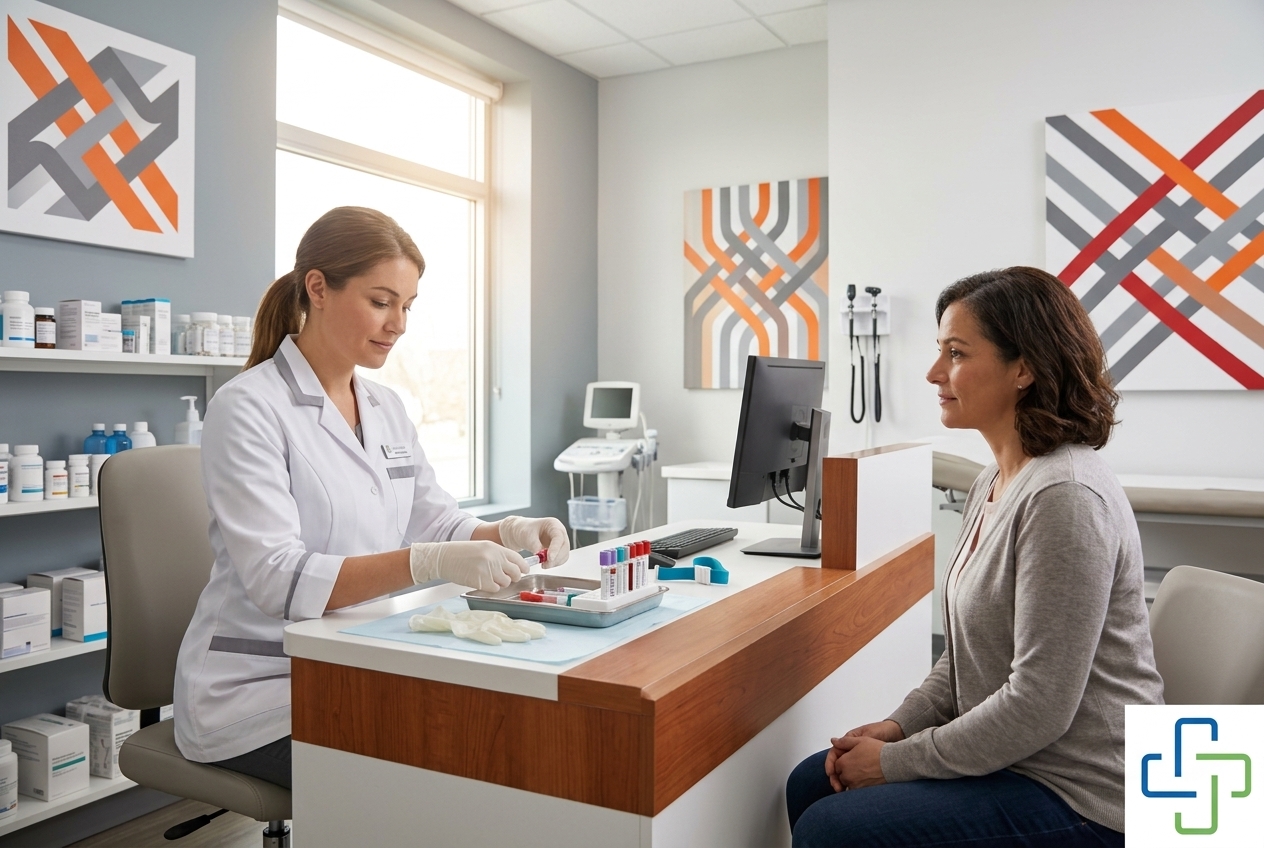
Private blood testing can be a convenient way to investigate symptoms, monitor an existing condition or check aspects of your health without waiting for a routine NHS appointment. At Avante Pharmacy in Edinburgh, blood tests are provided in a professional pharmacy setting, with pharmacist-led care and clear information about what happens before, during and after your appointment.
The exact process depends on the blood test or testing panel requested. Some tests require preparation, while others can be taken at any time of day. Understanding what to expect can help you attend confidently and ensure your sample is suitable for analysis.
What is a private blood test?
A private blood test is a paid testing service arranged outside the NHS. It may be requested for general health screening, nutritional assessment, hormone testing, monitoring or investigation of particular concerns. The appropriate test depends on your symptoms, medical history and the question you are trying to answer.
Blood testing can provide useful information about areas such as blood count, kidney and liver function, cholesterol, blood glucose, thyroid function, vitamins or hormones. However, no blood test gives a complete picture of health on its own. Results need to be considered alongside your symptoms, examination findings, medicines and personal circumstances.
Before booking, it is important to check that the selected test is suitable for your needs. If you are uncertain which test to choose, ask the pharmacy team for guidance. A private blood test does not replace urgent medical assessment or ongoing care from your GP or specialist.
Before your appointment
Check whether preparation is needed
Preparation varies between tests. Some blood tests may require you to fast for a specified period, usually meaning no food and only permitted drinks during that time. Other tests do not require fasting, and fasting when it is not needed may make you feel unwell unnecessarily.
When arranging your appointment, confirm whether you need to fast, whether water is allowed and whether the sample should be taken at a particular time. Certain hormone tests can be affected by the time of day or, where relevant, the stage of the menstrual cycle. If you have not received clear instructions, contact the pharmacy before attending.
Continue medicines unless advised otherwise
Do not stop prescribed medicines or supplements simply because you are having a blood test. Some medicines can affect results, but any change should only be made following advice from an appropriate healthcare professional. Bring a list of your prescribed medicines, over-the-counter products and supplements, or have the details available during your appointment.
Tell the healthcare professional if you take anticoagulants or medicines that affect bleeding, or if you have a condition that makes blood collection more difficult. Also mention pregnancy or the possibility of pregnancy, allergies to plasters or antiseptic products, and any previous problems with blood tests.
Plan for comfort and safety
Drink water unless your test instructions specifically say otherwise. Being well hydrated may make it easier to locate a vein. Wear clothing that allows the upper arm to be comfortably accessed without tight sleeves.
If you feel anxious around needles, have fainted during previous blood tests or are concerned about discomfort, let the team know when you arrive. They can take appropriate precautions, such as helping you sit or lie down and allowing you time to recover afterwards. If you are bringing a child or young person, check the age requirements and consent arrangements before booking.
During your blood test appointment
On arrival, the pharmacy team will confirm your identity, the test being requested and any relevant preparation. You may be asked about your health, medicines, allergies and previous experiences with blood sampling. This is an opportunity to ask questions before giving consent.
The sample is usually collected from a vein in the arm. The professional will clean the skin, apply a tourniquet and use a sterile needle to collect blood into one or more labelled tubes. You may feel a brief sharp sensation or pressure, but the procedure is generally quick. Tell the professional immediately if you feel dizzy, nauseated, unusually uncomfortable or unwell.
After the needle is removed, firm pressure is applied with cotton wool or gauze, followed by a plaster or dressing. Keep pressure on the area for as long as advised, particularly if you take medication that increases bleeding. A small bruise or mild tenderness can occur and usually settles without treatment. If bleeding continues, apply firm pressure and seek medical advice if it does not stop.
Correct identification and labelling are essential. Your sample may be sent to an external laboratory for analysis, depending on the test. The pharmacy team can explain how the sample will be processed and whether any further samples or information are required.
After your appointment and receiving results
Turnaround times depend on the tests requested, the laboratory processing the sample and whether additional analysis is needed. You should be told how and when results will be provided. If a sample cannot be analysed, for example because it is insufficient or unsuitable, you may need to provide another sample.
Results are usually reported with reference ranges. These ranges are guidance based on the testing laboratory’s methods and the relevant population; they are not a simple distinction between being healthy and unwell. A result outside the reference range does not automatically confirm a diagnosis, and a result within the range does not rule out every possible condition.
Some results can be affected by fasting status, recent illness, exercise, medicines, supplements, pregnancy or the timing of collection. This is why results should be interpreted with your symptoms and medical history. If you have booked testing to investigate a specific concern, arrange appropriate follow-up with your GP or another qualified healthcare professional, particularly if symptoms continue.
Avante Pharmacy can explain the information supplied with your results and advise when further medical assessment may be appropriate. However, a private blood test is not a substitute for a GP consultation, specialist review or urgent treatment. If your results indicate a potentially serious concern, you may be advised to contact your GP or another healthcare service promptly.
When to seek urgent medical help
Do not wait for a routine blood test if you have severe or rapidly worsening symptoms. Seek urgent medical help for symptoms such as severe chest pain, significant difficulty breathing, sudden weakness or difficulty speaking, collapse, heavy bleeding or a severe allergic reaction. For immediate danger, call 999. For urgent but non-life-threatening concerns in Scotland, contact NHS 24 on 111.
Booking a private blood test in Edinburgh
A private blood test may offer a convenient route to appropriate testing, provided the test is selected carefully and the result is interpreted in context. Before booking, check preparation requirements, disclose relevant health information and make sure you understand how results will be returned and what follow-up may be needed.
To discuss your requirements or arrange an appointment, book a private blood test at Avante Pharmacy in Edinburgh.