
Human papillomavirus (HPV) is a very common virus passed through close skin-to-skin contact, including sexual contact. Most HPV infections cause no symptoms and clear naturally, but some types can persist and contribute to cancers, including cervical, anal, penile, vulval, vaginal and some mouth and throat cancers. HPV can also cause genital warts.
HPV vaccination helps prevent infection with the HPV types most strongly linked to these conditions. It is most effective when given before exposure to HPV, but older teenagers and adults may still benefit. Avante Pharmacy offers convenient HPV vaccination appointments for eligible young people and adults, subject to an individual assessment.
Who is eligible for HPV vaccination?
Routine vaccination for young people
In the UK, HPV vaccination is routinely offered to children in school Year 8, usually when they are aged 12 or 13. The NHS programme is designed to provide protection before most young people become exposed to HPV.
Young people who missed their routine vaccination may be eligible for an NHS catch-up vaccination. In general, NHS catch-up vaccination is available to those who are under 25 when they become eligible for the catch-up programme. Eligibility can depend on age, previous vaccination and local arrangements, so our pharmacy team can discuss the options with you.
Adults
Adults who were not vaccinated when younger may choose to have the HPV vaccine privately. Vaccination may be particularly worth considering if you have not previously completed a course, although the likely benefit depends on your age, previous exposure and personal circumstances.
Men who have sex with men may be eligible for HPV vaccination through NHS sexual health services up to and including the age of 45. Those who do not meet NHS eligibility criteria can ask about private vaccination. A pharmacist can explain whether vaccination is appropriate and how many doses are recommended.
The vaccine does not provide treatment for HPV that is already present, genital warts or HPV-related disease. However, previous exposure to one HPV type does not necessarily mean exposure to all types covered by the vaccine, so vaccination can still offer protection.
How many HPV vaccine doses are needed?
The number of doses depends on your age when vaccination starts, your immune health and any previous doses recorded.
- Young people starting vaccination before their 25th birthday: a single dose is generally recommended for people with a healthy immune system.
- People starting vaccination at age 25 or over: two doses are usually recommended, with the second dose given at least six months after the first.
- People who are immunosuppressed or living with HIV: three doses may be advised because the immune response can be lower. The timing will be discussed with a healthcare professional.
If you have already received one or more HPV vaccine doses, you may not need to restart the course. Bring any vaccination information you have to your appointment. The pharmacist can review your history and advise whether further doses are needed.
Where a course requires more than one dose, it is important to attend at the recommended intervals. If a dose is delayed, the course will usually continue rather than start again, but you should ask a healthcare professional for advice.
What happens at an HPV vaccination appointment?
The pharmacist will ask about your age, previous vaccinations, allergies, medical conditions, medicines and any circumstances that may affect vaccination. They will confirm whether the service is suitable and explain the expected benefits and possible side effects.
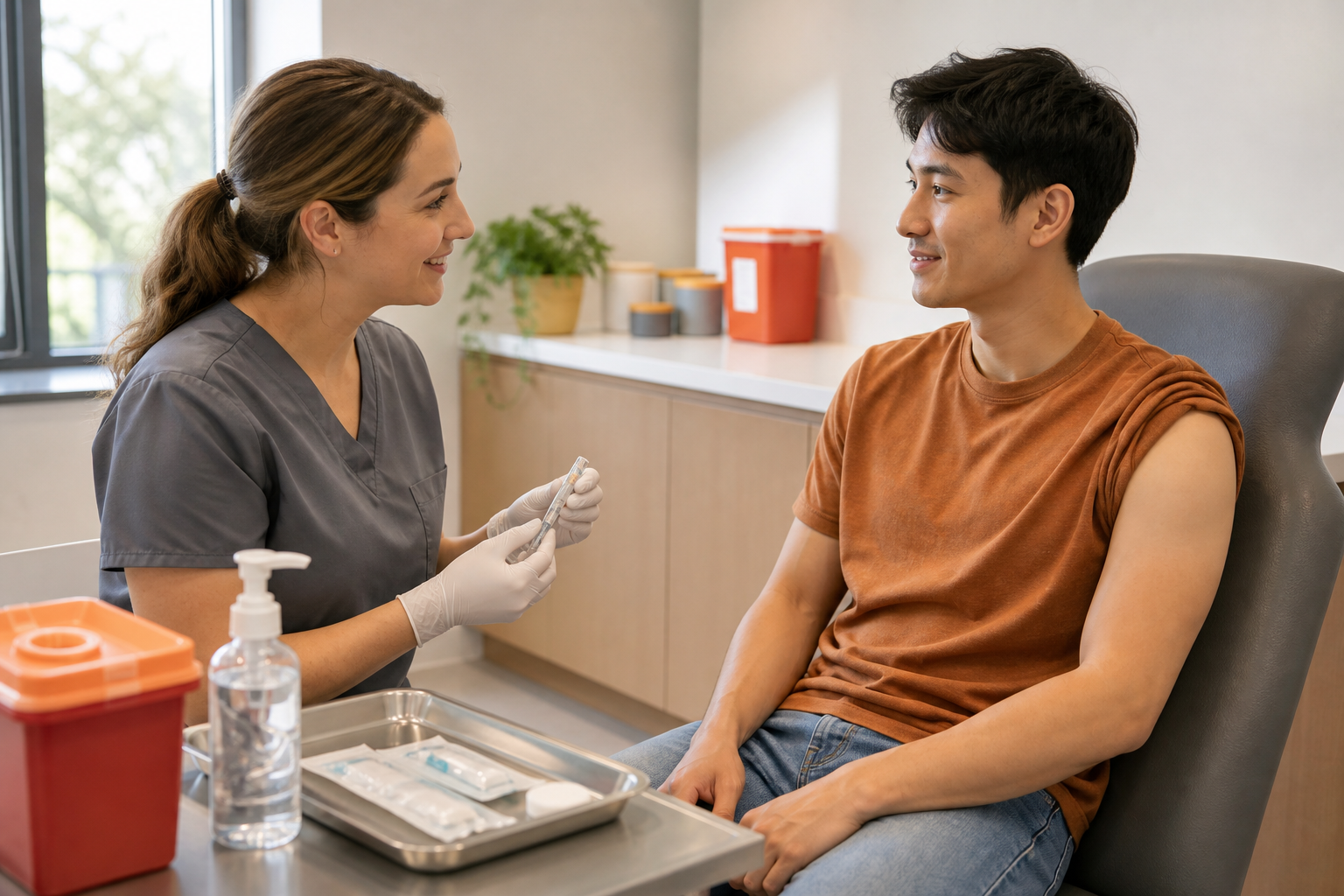
The vaccine is given as an injection into the upper arm. You may be asked to remain at the pharmacy for a short period afterwards, as with other vaccinations. Wear clothing that allows easy access to the upper arm and bring details of previous vaccinations if available.
For young people, consent is normally provided by a parent or person with parental responsibility. A young person may also be able to consent for themselves if the healthcare professional is satisfied that they understand the information and implications of the treatment. This is considered on an individual basis.
Common questions about the HPV vaccine
Is the HPV vaccine safe?
HPV vaccines have been used in national vaccination programmes for many years. Like all medicines, they can cause side effects, but most are mild and short-lived. Common effects include soreness, redness or swelling at the injection site, headache, tiredness, mild fever, nausea or aching muscles.
Some people feel faint around injections, particularly teenagers. You may therefore be vaccinated while seated, and the team may ask you to rest afterwards. Serious allergic reactions are very rare, but the pharmacy is prepared to respond to an immediate reaction.
Can the HPV vaccine cause HPV infection?
No. The vaccine does not contain live HPV and cannot cause an HPV infection. It stimulates the immune system to recognise and respond to specific HPV types.
Do I still need cervical screening after vaccination?
Yes. HPV vaccination does not protect against every HPV type that can cause cancer, and it does not replace cervical screening. If you are invited for cervical screening, you should attend even if you have completed the HPV vaccination course.
Can I have the vaccine if I am pregnant?
HPV vaccination is not routinely recommended during pregnancy. If you become pregnant after starting a course, further doses are usually postponed until after the pregnancy. There is no known reason to be concerned if a dose was given before pregnancy was recognised. Breastfeeding is not generally a reason to delay vaccination, but discuss your circumstances with the pharmacist.
What if I have an allergy?
Tell the pharmacist if you have ever had a severe allergic reaction to a previous HPV vaccine dose or any of its ingredients. Vaccination may need to be avoided or referred for specialist advice. A minor illness does not usually prevent vaccination, but vaccination may be postponed if you are acutely unwell.
Does HPV vaccination remove the need for safer sex?
No. The vaccine does not protect against every sexually transmitted infection, and it does not prevent pregnancy. Condoms and other barrier methods can reduce the risk of HPV transmission and other infections, although they cannot cover all areas of skin through which HPV may spread.
Book an HPV vaccination appointment in Edinburgh
Whether you are checking your eligibility, completing a missed course or considering private vaccination as an adult, Avante Pharmacy can provide clear, pharmacist-led advice. Book an HPV vaccination appointment to discuss your needs and the recommended dose schedule.