
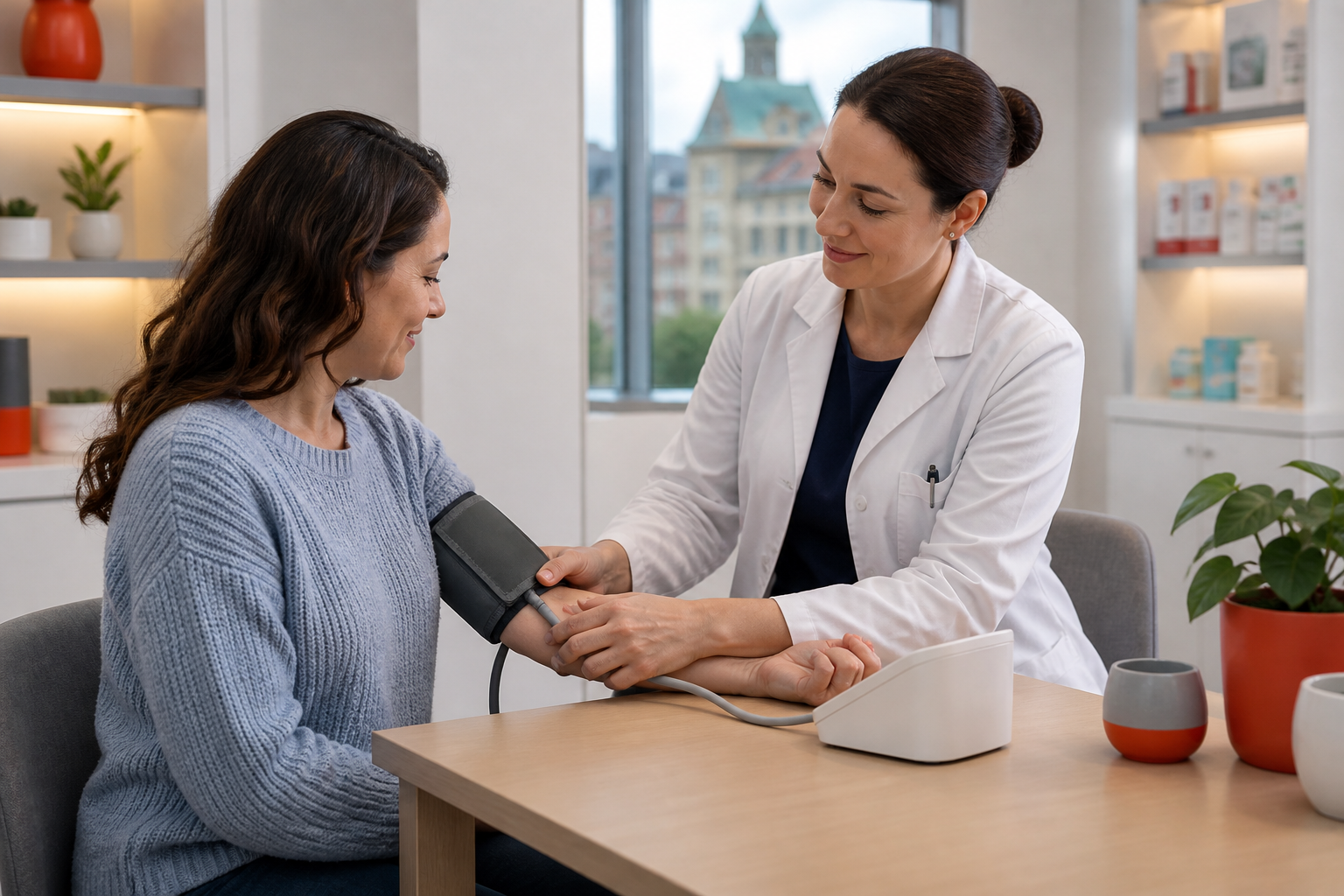
Blood pressure is a measure of the force of blood moving through your arteries. It can change throughout the day, and a single reading does not usually tell the whole story. Regular, correctly taken measurements can help identify a possible problem early and guide you towards the right next steps.
Understanding the two numbers
A blood pressure reading is written as two numbers, for example 120/80 mmHg. The first, or systolic, number measures pressure when your heart beats. The second, or diastolic, number measures pressure between beats, when your heart relaxes. Both numbers matter: either can be raised.
Blood pressure is often high without causing noticeable symptoms. Over time, untreated high blood pressure can increase the risk of heart disease, stroke and other health problems. A reading is therefore useful even if you feel well. Equally, one higher-than-usual result may reflect temporary factors such as stress, pain, recent activity or caffeine, rather than your usual blood pressure.
What counts as a high reading?
For an adult, a blood pressure measured in a clinic or pharmacy is generally considered high if it is 140/90 mmHg or above. A high reading does not, by itself, confirm hypertension. A healthcare professional may recommend repeat readings or monitoring at home or over 24 hours to check whether it remains high.
For home or 24-hour monitoring, an average of 135/85 mmHg or above is generally considered high. These thresholds are not a substitute for individual advice: your age, health, medicines and circumstances may affect how your readings are interpreted. Children and some people with particular health conditions need different assessment.
A reading below 90/60 mmHg is often described as low. Some people naturally have lower readings and feel perfectly well. If low readings come with dizziness, weakness, blurred vision, nausea or fainting, speak to a healthcare professional, particularly if the symptoms are new or recurring.
Getting an accurate measurement
Small details can affect a reading. For a more reliable result, try to:
- Avoid smoking, strenuous exercise and drinks containing caffeine for about 30 minutes beforehand.
- Use the toilet if needed, then sit quietly for around five minutes.
- Sit with your back supported, feet flat on the floor and legs uncrossed.
- Keep your arm relaxed and supported at about heart level, with the cuff placed on bare skin.
- Stay still and avoid talking while the measurement is taken.
A cuff that is the wrong size or placed over clothing can affect the result. If you are checking your blood pressure at home, use a validated monitor and follow its instructions. Take readings at the times advised and record them, including the date and time. Do not change or stop prescribed medicines because of a reading unless a healthcare professional tells you to.
When should you get your blood pressure checked?
It is sensible to have your blood pressure checked periodically, even if you feel well, especially if you have not had a measurement for some time. Consider arranging a check if you have a family history of high blood pressure, have been told that a previous reading was raised, or have a condition or treatment that may affect your blood pressure. A pharmacist or GP can help you decide how often to check it.
Arrange a check if you have symptoms such as recurring headaches, dizziness or blurred vision, but do not assume that these are caused by blood pressure. High blood pressure often has no symptoms, and these problems can have many other causes. Seek appropriate medical advice rather than relying on a reading to explain how you feel.
If you are pregnant or have recently given birth, contact your midwife, maternity unit or GP for advice about blood pressure concerns. A raised reading in pregnancy needs appropriate assessment, particularly if you also have a severe headache, visual changes, pain beneath the ribs, sudden swelling or feel very unwell.
What happens if a reading is high?
If your reading is above the usual clinic threshold, it may be repeated after a short rest. Depending on the result and your circumstances, you may be advised to arrange further measurements at home or through your GP. This helps establish whether the rise is persistent and reduces the chance of making decisions based on a one-off result.
Very high readings need prompt attention. If a reading is around 180/120 mmHg or higher, contact a healthcare professional urgently for advice, even if you feel well. If you have a very high reading alongside chest pain, severe shortness of breath, weakness or numbness on one side, confusion, difficulty speaking, or a sudden severe headache, call 999.
How pharmacy monitoring can help
A blood pressure monitoring appointment offers a convenient way to have your reading checked and understand what it may mean. The pharmacist can explain the result, discuss factors that may affect it and advise whether repeat monitoring or contact with your GP is appropriate. Bring a list of your medicines and, if you monitor at home, your recent readings.
Monitoring supports good care but does not replace a GP assessment when one is needed. If you have a concerning result or ongoing symptoms, follow the advice given and seek further medical help. Keeping a record of readings can make conversations with your healthcare team more useful.
Book a blood pressure check
For a convenient check and clear advice on your next steps, book a blood pressure monitoring appointment with Avante Pharmacy.